National Initiatives for Development Organization (NIDO)

Latest News

Current Projects, Latest News

Restoring Hope in South Darfur: How UNICEF’s Support Helped Save Ahmed’s Life

A donor‑focused human‑interest story highlighting UNICEF’s impact and value for money When Fatima carried her two‑year‑old son Ahmed into the PHC clinic in Shattaya, she feared she was too late. Months of displacement had left the family without food, without health care, and without certainty. Ahmed had grown weak and silent—signs no mother ever wants to see. Inside the clinic, Fatima found what she had been desperately searching for: trained health workers, essential medicines, and a system ready to support her child. This was possible because UNICEF ensured that “37 primary healthcare facilities (PHCCs)—including 4 mobile clinics—provided free, essential services…” across South Darfur. UNICEF’s Investment, Ahmed’s Second Chance A simple MUAC measurement confirmed that Ahmed was suffering from Severe Acute Malnutrition. Thanks to UNICEF‑funded CMAM services, he was immediately enrolled in treatment and provided with therapeutic food—completely free of charge. Ahmed is one of 4,723 children admitted for SAM treatment this quarter. Community‑based treatment—supported by UNICEF—costs only a fraction of inpatient care, making it one of the most cost‑effective, high‑impact interventions in humanitarian health. UNICEF’s Support Reaches Entire Communities UNICEF’s investment didn’t just save Ahmed—it strengthened the entire health and nutrition system: 470,876 women and children accessed primary health care services. 100,780 children were screened for malnutrition. 60,020 children and 13,333 PLW were reached through integrated campaigns. 44 Mother Support Groups and 50 Community Nutrition Volunteers were trained and activated. These results demonstrate UNICEF’s commitment to scalable, efficient, and community‑driven programming—ensuring every dollar delivers maximum impact. Reaching the Hardest‑to‑Reach, Because UNICEF Makes It Possible In remote areas like East Jabal Marra, where insecurity and distance often block access to care, UNICEF‑supported mobile clinics travel long distances to reach families like Fatima’s. These clinics provide vaccinations, antenatal care, nutrition screening, and treatment—services that would otherwise be out of reach. This approach ensures equitable access, even for the most isolated communities. A Partnership That Changes Lives For Fatima, UNICEF’s support meant more than medical treatment—it meant hope. As she left the clinic with Ahmed’s RUTF supply, she whispered, “You gave me back my child.” For UNICEF, her words reflect the true return on investment: a healthier child, a stronger community, and a future that would not have been possible without UNICEF’s leadership and generosity.
Current Projects, Latest News

Q1 SRH services

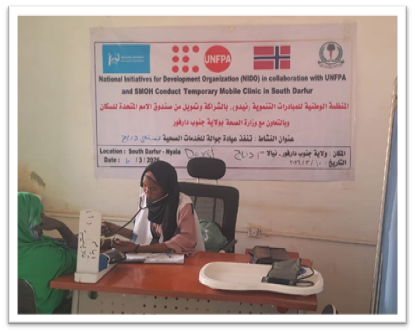
NIDO extends its heartfelt appreciation to UNFPA and the Government of Norway for their steadfast support in delivering lifesaving sexual and reproductive health services across South Darfur during the first quarter of the year. With this generous support, NIDO’s five mobile clinics and Alwihda Hospital provided essential care to over 5,000 individuals between January and March. Key achievements include: 384 antenatal care visits and 90 postnatal consultations through mobile clinics 616 under‑five consultations and 1,512 general medical consultations 113 family planning users and 20 referrals for long‑acting methods 117 GBV counselling sessions and 2,235 community members reached with SRH and GBV awareness At Alwihda Hospital: 455 normal deliveries and 392 caesarean sections 318 women received post‑abortion care 1,057 women received FP counselling 310 individuals treated for STIs These services reached conflict‑affected, displaced, and hard‑to‑reach communities—especially in East Jebel Marra—where access to health care remains extremely limited. NIDO is deeply grateful to UNFPA and the Norwegian Government for their continued commitment to protecting the health, dignity, and rights of women and girls in South Darfur. Their partnership remains vital in ensuring that vulnerable communities receive the care they deserve.

Current Projects, Latest News

Human interest story SHF 2026

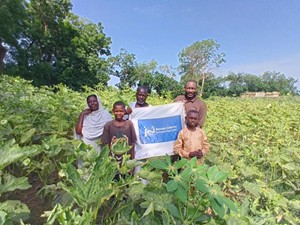
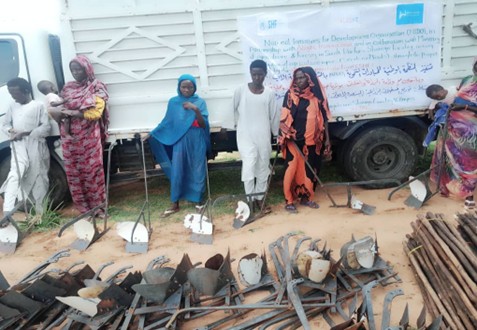
When the last farming season arrived in Shattaya Locality, South Darfur, a mother and smallholder farmer (name withheld for protection) stood at the edge of her small plot and listened to the dry wind move through empty stalks. In her home, there was less and less to stretch for meals, and the children’s questions— “Will we eat today?”—were getting harder to answer. Displacement and repeated shocks had already taken what little the family had saved, and without quality seeds or basic tools, the land that once fed them was turning into another reminder of loss. Then support reached her community. With funding from the Sudan Humanitarian Fund (SHF), the National Initiatives for Development Organization (NIDO), in partnership with Alight International, delivered a livelihoods package to help families restart production with dignity. She received improved crop seeds and essential agricultural tools—simple items, but for her they felt like a second chance. She also joined practical farmer sessions on soil preparation, planting, and protecting crops, learning steps she could apply immediately. For the first time in months, she said she felt she was planning for tomorrow instead of only surviving today. Planting on time changed everything. Instead of borrowing for input or selling the few household items left, she put the seeds in the ground and worked the soil with proper tools. “Now I can work my land properly,” she explained, describing how the support eased the fear that the season would pass again with nothing to show for it. Across Shattaya 71 people (women, men, girls, and boys) benefited from the agriculture input package—helping households return to their farms, protect the next harvest, and reduce harmful coping strategies. Behind every number is a family like hers: tired, determined, and still choosing to rebuild. This progress was made possible through SHF support and the collaboration between NIDO and Alight International. Lorem ipsum dolor sit amet, consectetur adipiscing elit. Ut elit tellus, luctus nec ullamcorper mattis, pulvinar dapibus leo.

Latest News, NIDO SUCCESSFUL STORIES

NIDO Success story

Hussein Adam Ahmed is Darfurian a 49- year-old man from South Darfur,  a father of five boys and  four daughters staying in one house , whose are affected by current Sudan conflict while  displaced from his home to east while his home been looted and after year a half returned to his home, but there no thing to doing as previous working at market and after war lost everything, and there’s no labor work to gain wage, while  the main sources is depend on agriculture production, Sorghum and millet the main staple food crops across Darfur region, and Hussein  this year became one of small farmer who supported by CHF project, at the beginning he faced challenge of get a piece of land, as pervious rental  land for cultivation along a percentage payback scheme, like other an unowned land for farming, eventually, he was scrapped in favor of a per-season rental scheme of 10 Fadden, locally known as (makhmas) a little bit big then Fadden, on which he grows various crops, such as Sorghum, millet , Okra, Cowpeas, Watermonel  and  vegetables. In Darfur agriculture is the main source of income for over 70% of the population, and 80% of the workforce is employed in agriculture, Hussein is one of the project beneficiaries and project funded of CHF, Implemented by NIDO its partnership with ALIGHT international, the project introduced improved, certified seeds to farmers to moving away from traditional local seeds, whereby provided tools and seeds to improve their crop production yields, Another successful aspect of  CHF  agriculture interventions has been to encourage and support the sowing of  varies certified- improved  seeds, Hussein is always loved agriculture and after got plot of land, and I had to turn it into a productive farm,” Hussein shared. “At the time, I didn’t have any money to start with, during war, it’s very difficult to get loans from banks when you have nothing to guarantee it, being IDP and a poor, Despite the lack of resources to rent, But I always believed in God, to find someone to support even with Seeds and tool to clear the land for planting and start producing something.” Eventually, in kind supported by organization and received agriculture extension session on agriculture related issues and grow varies crops, However, he assessed the markets in Okra Status and realized that okra supply was unstable during earlier times of scarcity. For example, during periods of heavy rains, there was not enough okra in the market to meet demand, along with cucumbers, watermelons, and peanuts, which are usually cash crops. These days, Hussein and his family members collect 3 to 4 bags of okra from the farm daily and sell some of them. What he earns the first time is return money that borrowed during the beginning of the rainy season while planting. This now saves 280 Sudanese pounds, since the harvest has been going on for three weeks, where able them to sell a portion of the crop to buy  other needs such as sugar and meat to supplement his family’s diet and also some shoes and clothes for the children and other cuts,  dry it for selling later after rain season over,  in order for them to sell it at premium price, in terms of Food Security impact against  Okra farming  which helps families supplement their food rations and improves overall household nutrition, especially for children and its economic opportunity for  then earn cash from selling their okra, which they use for school fees, buying essential supplies, and savings, contributing to their financial independence. He has ambitious plans for the future that will make his efforts a benchmark for agricultural success in the area  and he focus is to grow and to increase his agricultural business activities in the near future, and leading to increased profits from okra sales, while other initiatives focus on teaching sustainable practices and sharing knowledge to overcome challenges like poor harvests-n he said.         Dry okra

Latest News

CMR Orientation Session

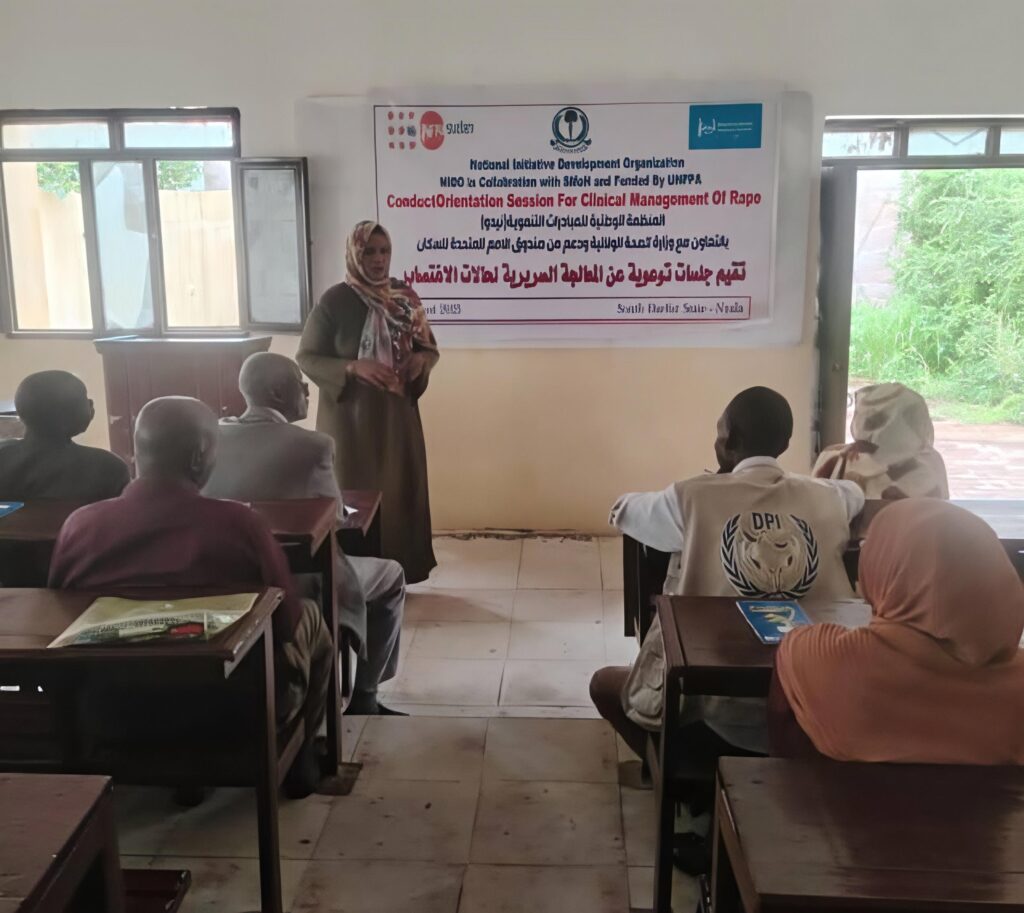
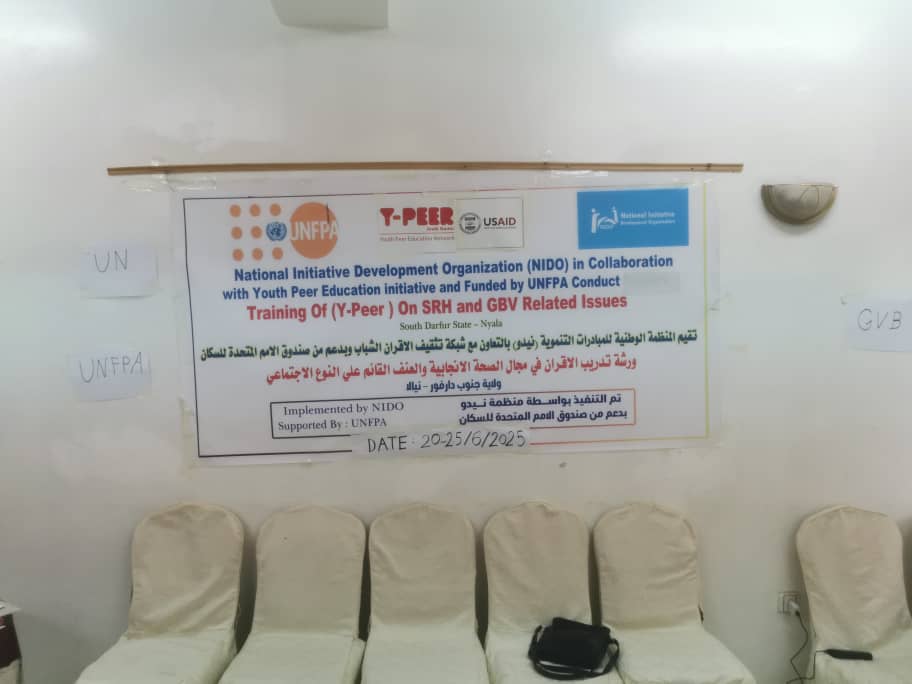
As part of our efforts to strengthen the capacity of health workers and humanitarian staff, an Orientation Session on Clinical Management of Rape (CMR) was conducted with the participation of representatives from different sectors. ✅ The session focused on: Emergency medical care and psychosocial support. Referral pathways and coordination among key actors. Ensuring confidentiality and dignity of survivors. The orientation contributed to raising awareness and enhancing knowledge, while participants emphasized the importance of continuing such sessions to build capacities and improve the quality of services provided to survivors of sexual violence.

Current Projects, Latest News

Supporting Women’s Dignity in Sudan

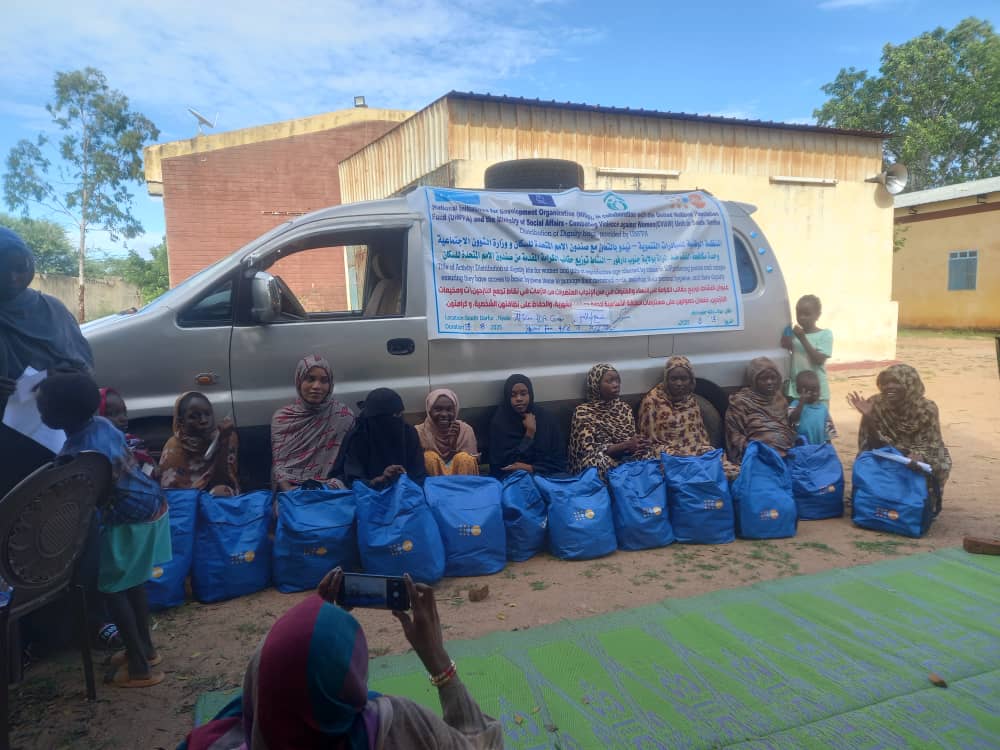
NIDO, in partnership with UNFPA, successfully distributed dignity kits to women and girls of reproductive age among the newly displaced persons (IDPs) at gathering sites, as well as within the host community in Sudan. A total of 139 women and girls have been reached so far, out of the 1,500 individuals targeted.

Latest News, NIDO SUCCESSFUL STORIES

NIDO Recognized for Health and Nutrition Services in Sudan

Port Sudan, May 2025 — NIDO is proud to announce its recognition in the May 2025 Health Cluster Bulletin for its exceptional contributions to health and nutrition services in Sudan. This achievement reflects our dedication to providing life-saving care to underserved communities—with the support of partners who share our humanitarian mission. Through integrated health programs, mobile clinics, and community outreach, NIDO continues to make a tangible impact on the lives of thousands across Sudan.  

Current Projects, Latest News

National Initiatives for Development Organization (NIDO): Installation of Solar Systems Supported by UNFPA

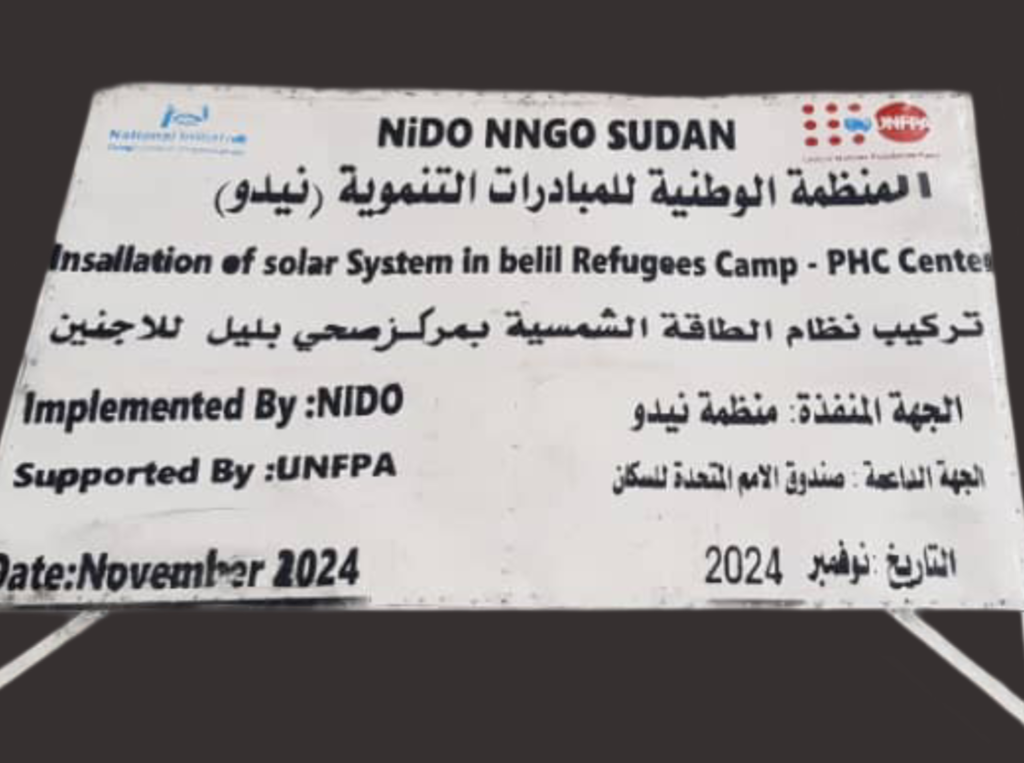
The National Initiatives for Development Organization (NIDO), with the support of the United Nations Population Fund (UNFPA), has successfully completed the installation of solar systems in seven health facilities. These include l, Alnimir, Abujabra, and Karrio in East Darfur, as well as Elmashaga, Belil, and Umdafug in South Darfur. This initiative is a critical step toward ensuring reliable and sustainable electricity for healthcare facilities, significantly enhancing service delivery and improving healthcare outcomes for local communities

Current Projects, Latest News, NIDO SUCCESSFUL STORIES

Success Story

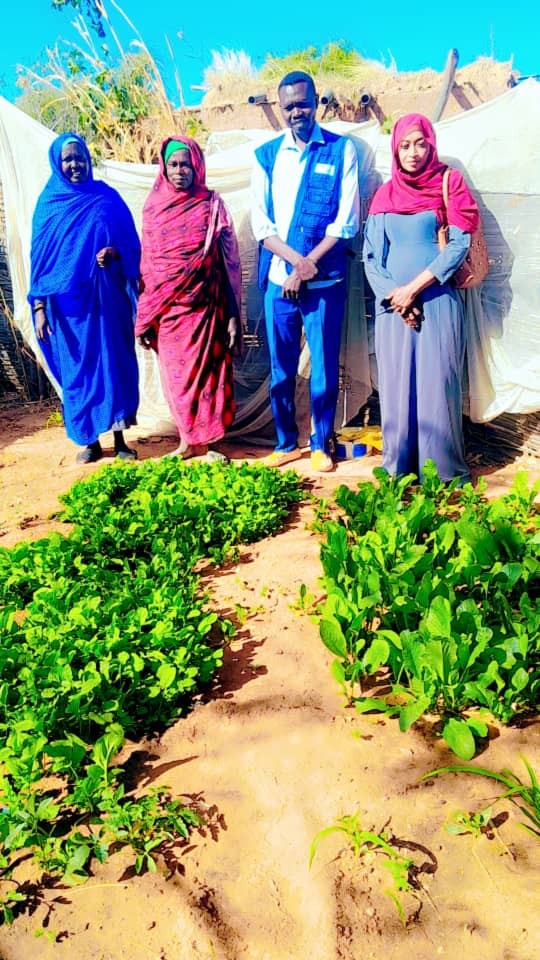
Nutrition sensitive activity Supported by C4FC project donated by World Vision: Halima is 30 years old the mother of 5 children 2 of them are under 5 years old, Halima is living in Kalam IDPs camp since 2006 up to date, She was Depending solely on Humanitarian assistance to continue surviving, when the war of Sudan erupted in April 2023, all humanitarian assistance were stopped from Darfur, Halima Said (both of my Children below 5 years old developed Malnutrition due to lack of food. With NIDO support, Halima have been trained on Nutrition sensitive activities and supported to have small home grown farm with different vegetables and fruits including bananas tomatoes, watercress and radish, this small garden products helped Haleema to feed herb children and take some products to sale in the market. NIDO also through its community volunteers and Mother Support groups in the camp, assessed the children for Malnutrition and referred them to the Nutrition center that supported by IMC. One month later, both children were cured from malnutrition and she continue feeding them from her home grown farm products and able to provide the daily requirements for her family consumptions of food, water and medication fees

Shares
Twitter